
The World of Cheese: A Beginner's Guide
Explore the diverse world of cheese from creamy brie to sharp cheddar. Learn about cheese-making, flavor profiles, and how to build the perfect cheese board.
The Ancient Art of Cheese Making
Cheese is one of humanity’s oldest foods, with evidence of cheese-making dating back over seven thousand years. What began as a method of preserving milk has evolved into an art form that produces thousands of varieties worldwide, each with unique flavors, textures, and characteristics. Whether you are a curious beginner or looking to deepen your appreciation, this guide will help you navigate the wonderful world of cheese.
While there are countless varieties, most cheese follows a basic production process. The type of milk determines the cheese’s character. Cow’s milk is the most common and can produce mild to sharp flavors, while goat’s milk tends to be tangy and earthy with a softer texture. Sheep’s milk is rich, nutty, and slightly sweet, and buffalo milk is creamy and mild, often used for mozzarella. Next, an enzyme called rennet, or an acid such as lemon juice, is added to the milk, causing proteins to clump together and separate from liquid whey. The curds are then cut, heated, and stirred to release more whey. The size of the cut affects moisture content, and smaller cuts produce harder cheeses. After that, curds are pressed into molds to form the cheese’s shape and expel remaining whey. Finally, the cheese is stored in controlled environments where temperature and humidity develop flavor and texture over weeks, months, or even years.
Fresh cheeses are unaged and have high moisture content with mild flavors. They include mozzarella, ricotta, feta, goat cheese, and mascarpone. Their texture is often soft and spreadable, their flavor is mild and milky, their shelf life is short, and they are best consumed fresh. Soft-ripened cheeses have a white, bloomy rind that ripens from the outside in. Examples include Brie, Camembert, Humboldt Fog, and Brillat-Savarin. They typically have a creamy, runny interior, earthy and mushroomy flavors, an edible white rind, and are best served at room temperature.
Semi-soft cheeses are pliable, with moderate moisture and versatile flavors. Havarti, Muenster, Fontina, and Gorgonzola Dolce fall into this category. They tend to have a smooth, sliceable texture, mild to moderate flavor, excellent melting properties, and work well for sandwiches and cooking. Hard cheeses are aged with low moisture and concentrated flavors. Examples include aged Cheddar, Parmigiano-Reggiano, Manchego, and Gruyère. They are firm and crumbly, with sharp, complex flavors, long aging periods ranging from months to years, and are excellent for grating.
Blue cheeses are inoculated with Penicillium mold, creating distinctive blue-green veins. Roquefort, Gorgonzola, Stilton, and Danish Blue are well-known examples. They have pungent, spicy flavors, a crumbly or creamy texture, a strong aroma, and pair well with sweet accompaniments. Washed-rind cheeses are washed with brine, beer, or wine during aging, creating orange-red rinds. Époisses, Taleggio, Limburger, and Munster are classic examples. They are known for a strong, pungent aroma, creamy and savory flavors, a sticky orange rind, and an intense but delicious character.
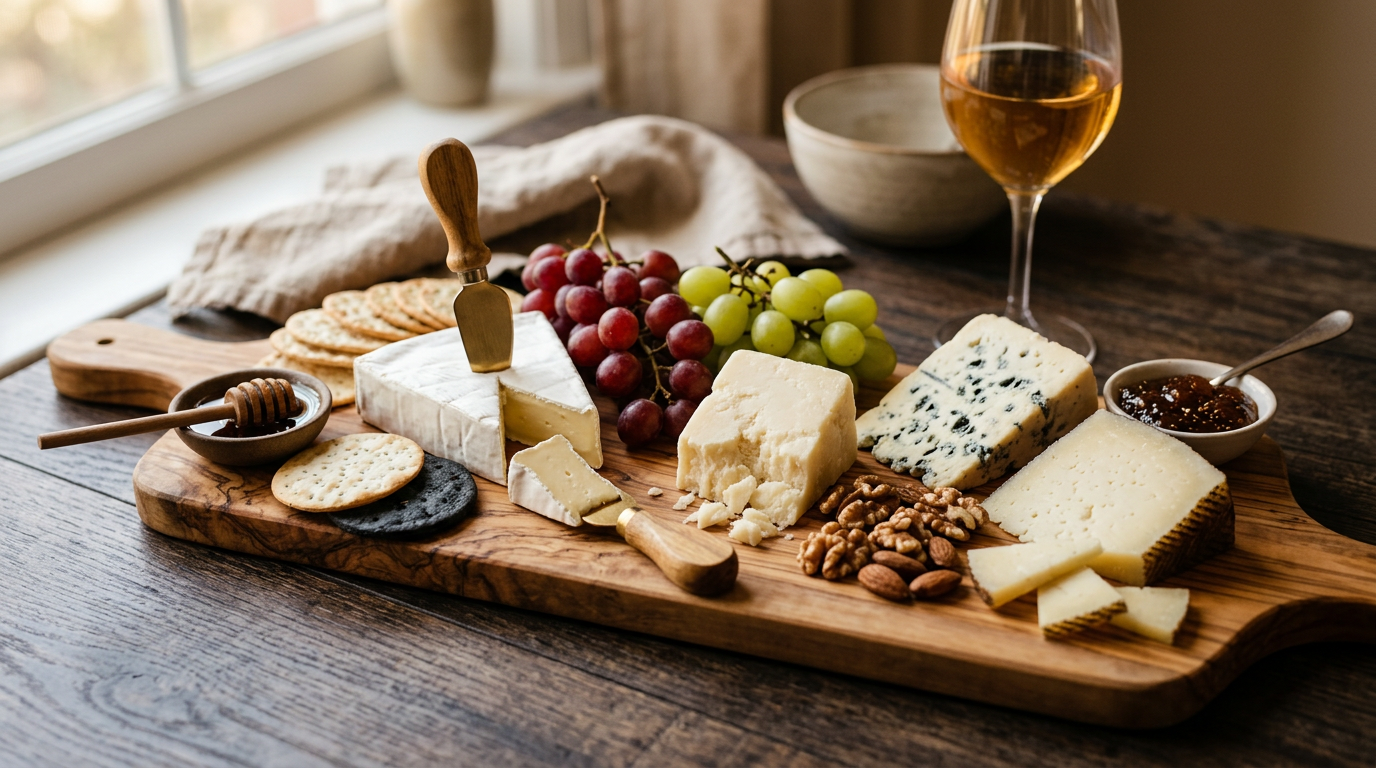
A well-curated cheese board is both visually stunning and delicious. When selecting cheeses, choose three to five with variety in milk type, texture, flavor intensity, and origin. Mixing cow, goat, and sheep’s milk, including soft, semi-soft, and hard textures, balancing mild and bold flavors, and drawing from different regions will create a more interesting board. A classic board might include Brie, aged Cheddar, Gorgonzola, and goat cheese. A more sophisticated selection could feature Camembert, Comté, Roquefort, and Bucheron.
Good accompaniments include plain water crackers that do not compete with cheese flavors, baguette slices, walnut bread, and grissini. Fruits can be fresh, such as grapes, figs, apple slices, and pear slices; dried, such as apricots, dates, and cranberries; or preserved, such as fig jam, quince paste, and honey. Nuts such as walnuts, almonds, Marcona almonds, and candied pecans add crunch, while cured meats such as prosciutto, salami, soppressata, and chorizo bring savory richness. For arrangement, place cheeses at different points around the board, cut some in advance while leaving some whole, group accompaniments near complementary cheeses, provide separate knives for each cheese, and allow cheeses to come to room temperature for thirty to sixty minutes before serving.
Pairing cheese with wine follows a few general guidelines. Soft, mild cheeses work well with light white wines such as Sauvignon Blanc and Pinot Grigio. Aged, hard cheeses pair nicely with full-bodied reds such as Cabernet Sauvignon and Merlot. Blue cheeses are often matched with sweet wines such as Port and Sauternes. Goat cheese shines with crisp whites such as Sancerre and Grüner Veltliner, while Brie and Camembert are excellent with Champagne or light reds such as Pinot Noir. Classic pairings include Parmigiano-Reggiano with Lambrusco, Roquefort with Sauternes, Manchego with Rioja, Brie with Champagne, and aged Gouda with Port.
To store cheese properly in the short term, wrap it in wax paper or parchment paper, then loosely in plastic, and keep it in the warmest part of the refrigerator, usually the vegetable drawer. It should be allowed to breathe rather than sealed tightly in plastic. For long-term storage, hard cheeses can be wrapped tightly and refrigerated for months. Some cheeses can be frozen, though the texture may change, and vacuum sealing can extend shelf life significantly. Signs of spoilage include unusual mold that differs from the cheese’s natural mold, an ammonia smell beyond the normal strong aroma, a slimy texture, and discoloration.
Cheese is a world of flavor waiting to be explored. From the simplest fresh mozzarella to the most complex aged blue, each variety tells a story of tradition, terroir, and craftsmanship. This guide can serve as a foundation, but the real pleasure comes from venturing out to discover personal favorites. Visiting local cheese shops, attending tastings, and trying something new are among the best ways to appreciate the vast and rewarding world of cheese.


