
Understanding Food Labels: What 'Natural' and 'Organic' Really Mean
Food packaging is full of claims that sound healthy but mean very different things. We decode the most common food labels so you can make informed choices at the grocery store.
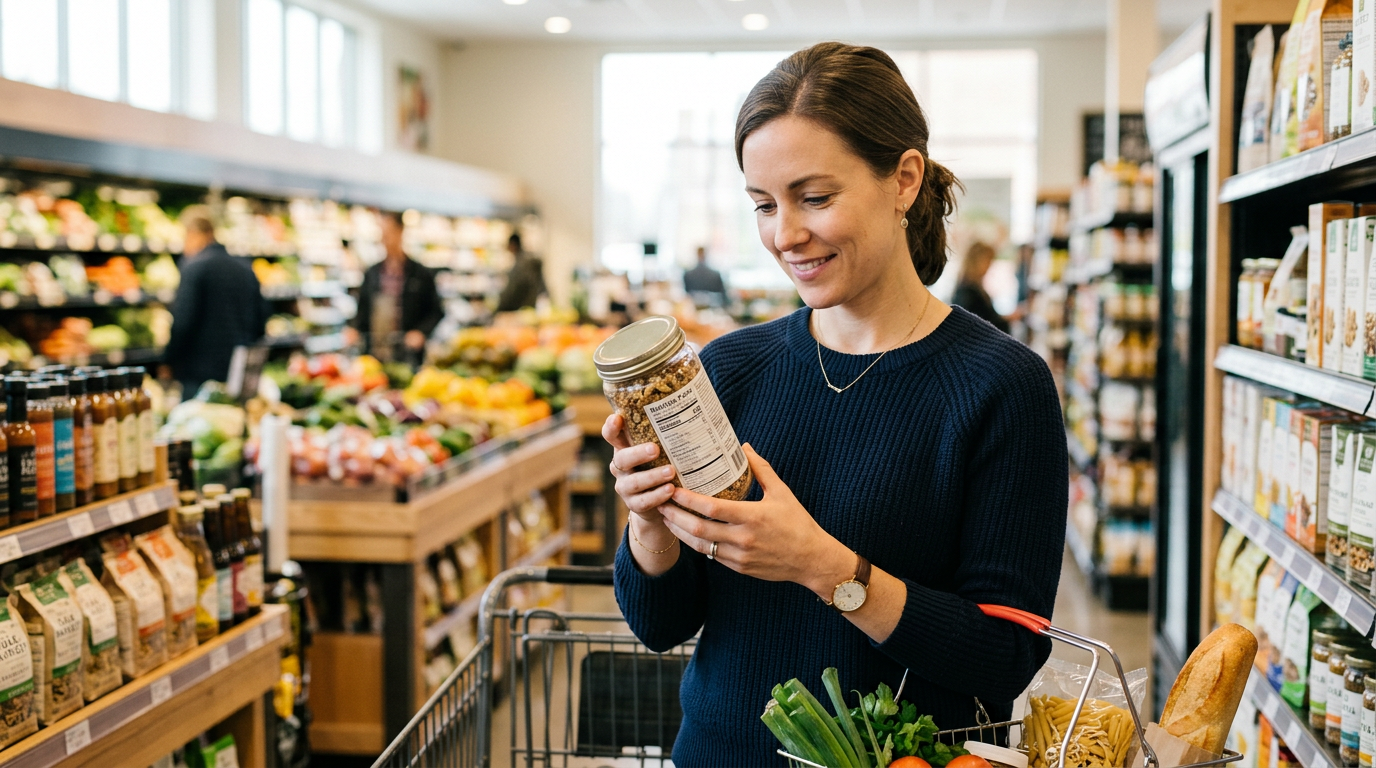
Walk down any grocery aisle and you'll be hit with claims: "Natural," "Organic," "Free-Range," "Grass-Fed," "No Added Sugar," "Whole Grain." These labels are meant to sway what you buy, but not all of them mean what you think. Knowing which terms are regulated and which are just marketing is key to making informed food choices.
USDA Organic is one of the most strictly regulated labels in food. To carry the seal, crops must be grown without synthetic pesticides, fertilizers, or genetic engineering; livestock must be raised without antibiotics or growth hormones and have access to the outdoors; and processed organic foods cannot contain artificial preservatives, colors, or flavors. There are three levels: "100% Organic" means all ingredients are organic; "Organic" means at least 95% are organic; "Made with Organic Ingredients" means at least 70% are organic.
For beef and lamb, "grass-fed" means animals got most of their nutrients from grass throughout their lives. But the USDA withdrew its official grass-fed standard in 2016, so certification now falls to third-party organizations with different standards. Look for third-party certifications such as "American Grassfed," which also requires animals to be raised on pasture, never confined to feedlots, and never given antibiotics or hormones.
For poultry, "free-range" or "free-roaming" means birds were allowed access to the outside. The rules don't specify the size, quality, or duration of that outdoor access. A door to a small concrete patch technically qualifies. "Pasture-raised" is a stronger claim, though it isn't officially regulated. Look for third-party certifications like "Certified Humane" or "Animal Welfare Approved."
"Non-GMO" means the product doesn't contain genetically modified organisms. The Non-GMO Project is the main third-party verifier. Organic already excludes GMOs, so a product that is both organic and non-GMO is redundant.
"Natural" or "all-natural" may be the most misleading label in food. The FDA has no formal definition for "natural" on food labels. The USDA defines it for meat and poultry as "minimally processed and no artificial ingredients," but that says nothing about how animals were raised, what they were fed, or what pesticides were used. In the end, "natural" tells you almost nothing about a product's quality or healthfulness.
The FDA doesn't regulate "whole grain." A product labeled "made with whole grains" might contain only a small percentage of whole grains. The only way to know if it's truly whole grain is to check the ingredient list: the first ingredient should be a whole grain, such as "whole wheat flour," not just "wheat flour." The Whole Grain Stamp from the Whole Grains Council indicates grams of whole grain per serving.
"No added sugar" means no sugar was added during processing, but the product may still contain naturally occurring sugars, like fruit juice concentrate. "Sugar-free" means less than 0.5 grams of sugar per serving, but the product may contain artificial sweeteners. Check total sugar on the nutrition label, not just the "added sugar" line.
"Multigrain" simply means the product contains more than one type of grain. It doesn't mean those grains are whole grains. A multigrain bread could be made entirely from refined flours. Look for "100% whole grain" or check that whole grains are listed first in the ingredients.
To read labels like a pro, ignore the front and read the back. Marketing claims on the front are designed to sell. The ingredient list and nutrition facts on the back tell the real story. Ingredients are listed by weight, so the first ingredient is the most abundant. If sugar, or a form of sugar like corn syrup, cane juice, or fruit concentrate, appears in the first three ingredients, the product is primarily sugar. Sugar also appears under many names, including high-fructose corn syrup, cane sugar, cane juice, agave nectar, rice syrup, maltodextrin, dextrose, sucrose, and fruit juice concentrate. Shorter ingredient lists are generally better. Whole foods don't need long ingredient lists. If you can't pronounce or don't recognize multiple ingredients, consider whether you really want to eat that product. Serving sizes can be misleading, too. Manufacturers sometimes use unrealistically small serving sizes to make nutrition numbers look better. Always check the serving size and compare it to how much you'd actually eat.
Food labels are a tool, but they're not the whole story. The most reliable approach to healthy eating isn't decoding labels. It's choosing whole, minimally processed foods: vegetables, fruits, whole grains, legumes, nuts, seeds, and quality proteins. When you do buy packaged foods, use labels as one data point among many. Look beyond the marketing claims to the actual ingredients, and remember that the healthiest foods often don't have labels at all. They are what they are.


