
Mastering the Perfect Steak: A Complete Guide
Learn how to cook the perfect steak every time. From choosing the right cut to mastering cooking techniques, this guide covers everything you need to know.
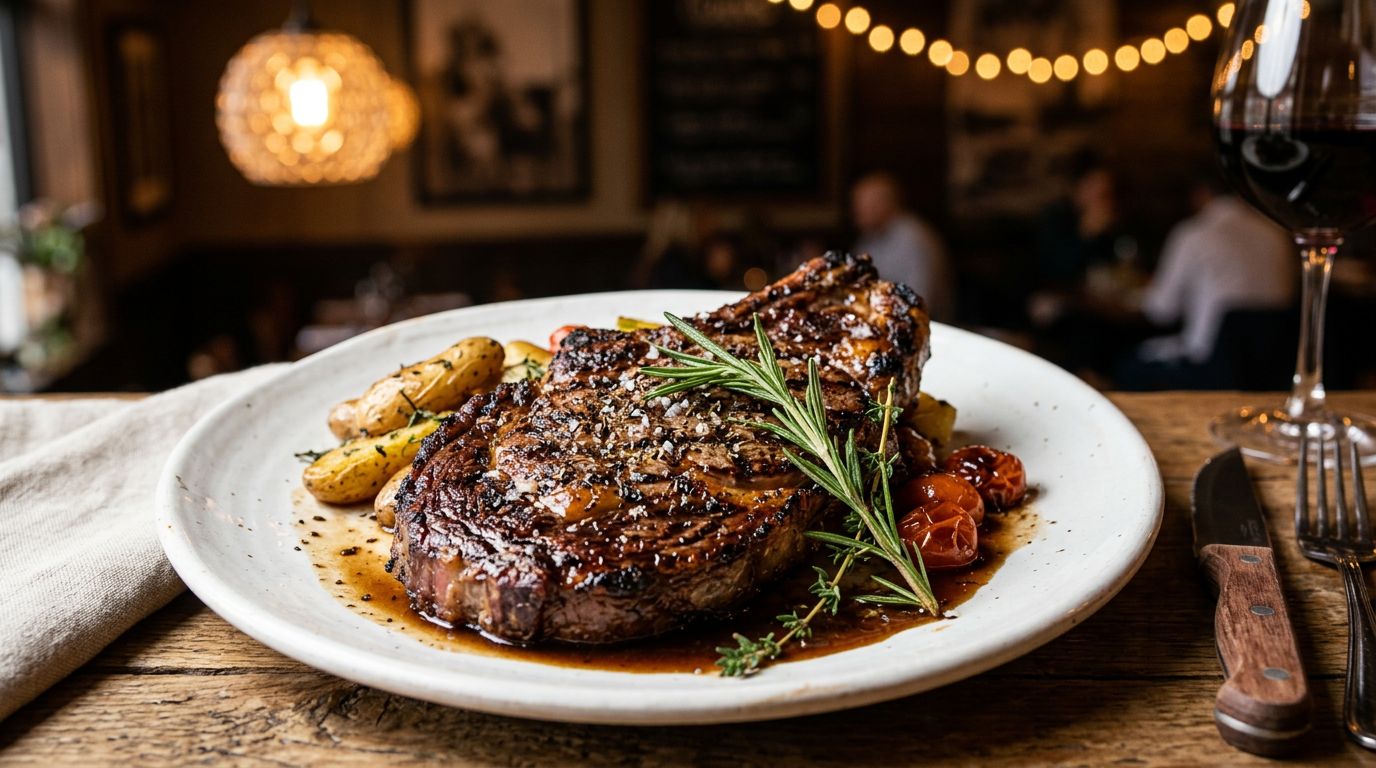
A perfectly cooked steak is one of life's simple pleasures: a crisp, caramelized crust giving way to tender, juicy meat with a deep, beefy flavor. It can seem intimidating, but cooking a great steak at home is entirely achievable with the right knowledge and technique. This guide covers everything from choosing the right cut to hitting your preferred level of doneness.
When it comes to cuts, filet mignon, also called tenderloin, is the most tender option, though its flavor is mild. It is very lean with minimal marbling, and it is best cooked to medium-rare to preserve that tenderness. It is expensive, but it can be worth it for a special occasion. Ribeye has a rich, beefy flavor and excellent marbling. Its fat cap renders during cooking, and it is a forgiving cut that stays juicy even if it is slightly overcooked. For the flavor it delivers, it is a great value. New York strip, or striploin, balances tenderness and flavor. It has less marbling than ribeye but more than filet, with a firm texture and a satisfying chew, and it works well with a variety of cooking methods. T-bone and porterhouse are two cuts in one: tenderloin on one side and strip on the other, separated by the T-shaped bone. Porterhouse has a larger tenderloin portion, and either makes an impressive presentation for grilling.
For budget-friendly options, flank steak is a lean, flavorful cut from the abdominal muscles. It is best marinated and cooked to medium-rare, and it must be sliced against the grain. It is excellent for fajitas and stir-fries. Skirt steak is similar to flank but has more marbling and flavor. It is the traditional cut for carne asada, cooks quickly because it is thin, and benefits from marinades. Chuck eye steak is sometimes called "poor man's ribeye." It has a similar flavor profile to ribeye at a lower cost, though it can be tough if it is not cooked properly, and it is great for braising or slow cooking.
Marbling refers to the white flecks of intramuscular fat distributed throughout the meat. That fat melts during cooking and bastes the meat from within. It carries flavor compounds that enhance taste, contributes to tenderness by separating muscle fibers, and creates a juiciness that lean cuts cannot match. USDA quality grades offer a useful guide: Prime has abundant marbling and is typically found in high-end restaurants; Choice has moderate marbling and is widely available in supermarkets; Select has minimal marbling, making it leaner but less flavorful.
Before cooking, take the steak out of the refrigerator 30 to 60 minutes ahead of time. This allows for more even cooking throughout, better crust formation because a cold steak steams instead of sears, and a shorter cooking time. Use paper towels to pat the steak completely dry before seasoning. Moisture on the surface prevents proper browning, since the Maillard reaction requires a dry surface; it also creates steam that inhibits crust formation and can leave the exterior gray and unappetizing. For seasoning, the classic approach is a generous amount of kosher salt on both sides and freshly cracked black pepper. Apply the salt at least 40 minutes before cooking, or immediately before. The dry brine method means salting the steak 24 to 48 hours in advance and leaving it uncovered in the refrigerator. This results in deeper seasoning and a drier surface for a better crust.
A cast iron skillet is the home cook's best friend for steak. Heat it over high heat until it is smoking, then add a high-smoke-point oil such as avocado, canola, or grapeseed. Place the steak in the pan and do not move it for 2 to 3 minutes. Flip it and cook for another 2 to 3 minutes. Add butter, garlic, and herbs, and baste continuously. Check the internal temperature and remove the steak when it is 5°F below your target. Grilling imparts smoky flavor and attractive char marks. Preheat the grill to high, around 500 to 550°F, and clean and oil the grates. Place the steak on the grill at a 45-degree angle to the grates. Cook for 3 to 4 minutes, then rotate it 90 degrees for cross-hatch marks. Flip and repeat on the other side. Move it to indirect heat if needed to finish cooking. The reverse sear produces incredibly even cooking with a perfect crust. Preheat the oven to 250°F (120°C), place the steak on a wire rack over a baking sheet, and cook until the internal temperature is 10 to 15°F below target. Heat a cast iron skillet until it is smoking hot, then sear the steak for 1 minute per side. Rest it and serve.
Use an instant-read thermometer for accuracy. Rare is 120 to 125°F (49 to 52°C) with a cool red center. Medium-rare is 130 to 135°F (54 to 57°C) with a warm red center and is often recommended. Medium is 140 to 145°F (60 to 63°C) with a warm pink center. Medium-well is 150 to 155°F (65 to 68°C) with a slightly pink center. Well done is 160°F and above (71°C and above) with little or no pink. Remove the steak from the heat 5°F before the target temperature, because it will continue cooking during resting.
Never skip resting your steak. It allows the juices to redistribute throughout the meat, the temperature to equalize, and the fibers to relax, resulting in tender bites. Rest standard steaks for 5 to 10 minutes and large cuts for 10 to 15 minutes. Tent them loosely with foil to retain warmth without trapping steam, which would soften the crust.
There are several common mistakes to avoid. Do not move the steak too much; let the crust form and resist the urge to constantly check or move it. Do not cook a cold steak, since it cooks unevenly and will not develop a proper crust. Do not overcrowd the pan; cook one or two steaks at a time, because overcrowding creates steam instead of sear. Do not cut too soon, because cutting immediately releases all the juices onto the cutting board. Use the right oil, meaning oils with high smoke points; extra virgin olive oil burns at steak-cooking temperatures.
For finishing touches, top your steak with a pat of compound butter for extra richness. Options include garlic herb butter, blue cheese butter, chimichurri butter, and truffle butter. A sprinkle of flaky sea salt just before serving enhances flavor and adds texture. While a great steak needs no sauce, options include red wine reduction, béarnaise, peppercorn sauce, and chimichurri.
Cooking the perfect steak is a skill that improves with practice. Start with quality meat, understand your cooking method, use a thermometer, and always let your steak rest. With these fundamentals mastered, you will be serving restaurant-quality steaks at home in no time. Remember that personal preference matters most. Whether you like your steak rare or well done, the techniques here will help you achieve your perfect steak every time.


