
Mastering the Five French Mother Sauces
The foundation of classical French cuisine rests on five mother sauces. Master these, and you unlock thousands of derivative sauces and countless culinary possibilities.
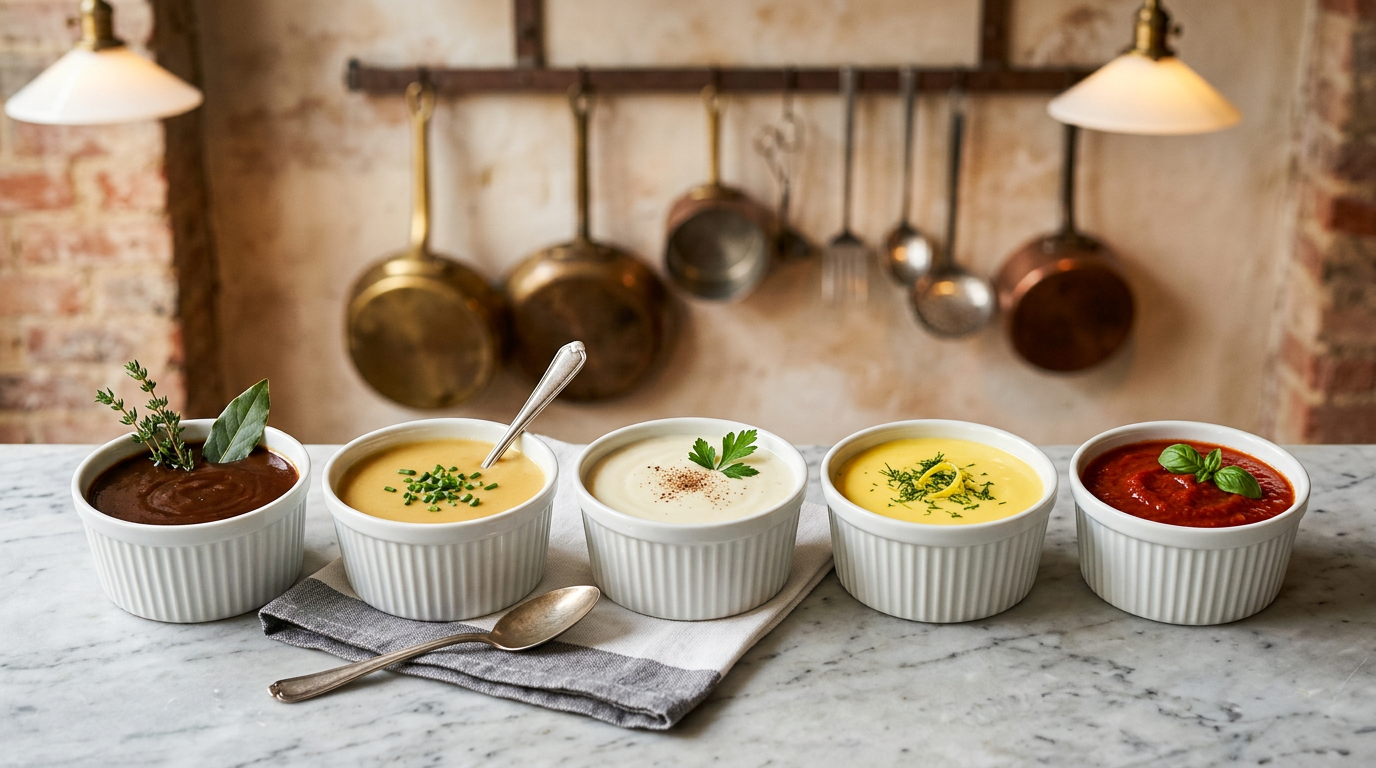
The foundation of French cuisine was shaped in the early 20th century, when the legendary chef Auguste Escoffier codified it into a system built on five foundational sauces. These “mother sauces” — Béchamel, Velouté, Espagnole, Sauce Tomate, and Hollandaise — are not recipes in themselves but rather frameworks. From each one, hundreds of secondary sauces branch out, creating an almost infinite culinary vocabulary. Understanding these five sauces is like learning the chords of music. Once you know the basics, you can play any song.
The first is béchamel, the white sauce. Its base is milk thickened with a white roux, which is butter and flour cooked briefly without coloring. To make it, melt butter in a saucepan over medium heat. Add an equal weight of flour and stir constantly for 2–3 minutes — do not let it brown. Gradually whisk in warm milk, a little at a time, until smooth. Simmer gently for 10–15 minutes, stirring frequently, until the sauce thickens enough to coat the back of a spoon. Season with salt, white pepper, and a pinch of nutmeg. Derivative sauces include Mornay, which adds Gruyère and Parmesan cheese; Nantua, which adds crayfish butter and cream; and Soubise, which adds slowly cooked, pureed onions. Common uses include lasagna, macaroni and cheese, croque monsieur, gratins, and as a binder for soufflés.
The second is velouté, the velvet sauce. Its base is white stock — chicken, veal, or fish — thickened with a blond roux, meaning butter and flour cooked until pale golden. Prepare the roux by cooking equal parts butter and flour for 3–4 minutes until it takes on a light golden color. Gradually whisk in warm white stock. Simmer for 20–30 minutes, skimming any impurities that rise to the surface. The result should be silky, smooth, and lightly thickened. Derivative sauces include Suprême, made by reducing velouté and adding cream, then finishing with butter; Allemande, made by adding egg yolks and cream to a reduced velouté; and Normande, made by adding mushroom cooking liquid, cream, and egg yolks. It is the starting point for many refined dishes, particularly poultry and seafood preparations.
The third is Espagnole, the brown sauce. Its base is brown stock, usually from roasted veal or beef bones, thickened with a brown roux and enriched with tomato paste and mirepoix. Roast veal bones and mirepoix — onions, carrots, and celery — until deeply browned. Cover with water and simmer for 6–8 hours to create brown stock. Separately, prepare a brown roux by cooking butter and flour until chocolate-colored. Combine the roux with the stock, add tomato paste, and simmer for 45 minutes, skimming frequently. Derivative sauces include Demi-glace, made from equal parts Espagnole and brown stock reduced by half; Bordelaise, made by adding red wine, shallots, and bone marrow to demi-glace; and Chasseur, made with mushrooms, shallots, white wine, and tomatoes. This sauce is the base for rich, deeply flavored sauces served with red meats and game.
The fourth is Sauce Tomate, the tomato sauce. Its base is tomatoes cooked with aromatics, optionally thickened with roux, though modern versions often omit it. Render diced salt pork or bacon in a heavy pot. Add mirepoix and cook until softened. Add crushed tomatoes, garlic, and a bouquet garni of thyme, bay leaf, and parsley. Simmer for 45 minutes to 2 hours, until the sauce thickens and the flavors concentrate. Season with salt, pepper, and a pinch of sugar to balance acidity. Derivative sauces include Creole, made with onions, bell peppers, celery, and cayenne; Provençale, made with garlic, olives, capers, and herbs; and Spanish, made with sautéed onions, garlic, and chorizo. Common uses include pasta, pizza, poached eggs, fish, and vegetables. It is the most universally used of all mother sauces.
The fifth is Hollandaise, the butter emulsion. Its base is egg yolks emulsified with clarified butter and acidified with lemon juice or vinegar reduction. Whisk egg yolks with a splash of water over a double boiler until pale and thick, at the ribbon stage. Remove from heat and slowly drizzle in warm clarified butter, whisking constantly to maintain the emulsion. Season with lemon juice, salt, and a pinch of cayenne. The sauce should be thick, glossy, and pourable. Derivative sauces include Béarnaise, made by replacing lemon juice with a tarragon and shallot vinegar reduction; Mousseline, made by folding in whipped cream for a lighter texture; and Maltese, made by adding blood orange juice instead of lemon. Common uses include Eggs Benedict, asparagus, steamed fish, and vegetables. It is the most technically challenging of the five.
Understanding mother sauces matters even if you never work in a French kitchen. You do not need to be a French chef to benefit from them. They teach fundamental cooking principles — how to make a roux, how to emulsify, how to build layers of flavor. These skills transfer to every cuisine. When you understand the structure, you can improvise with confidence.


