
A Guide to Cooking with Spices: Building Flavor from Scratch
Master the art of using spices to transform simple ingredients into complex, flavorful dishes. Learn about spice profiles, pairing, and proper storage techniques.
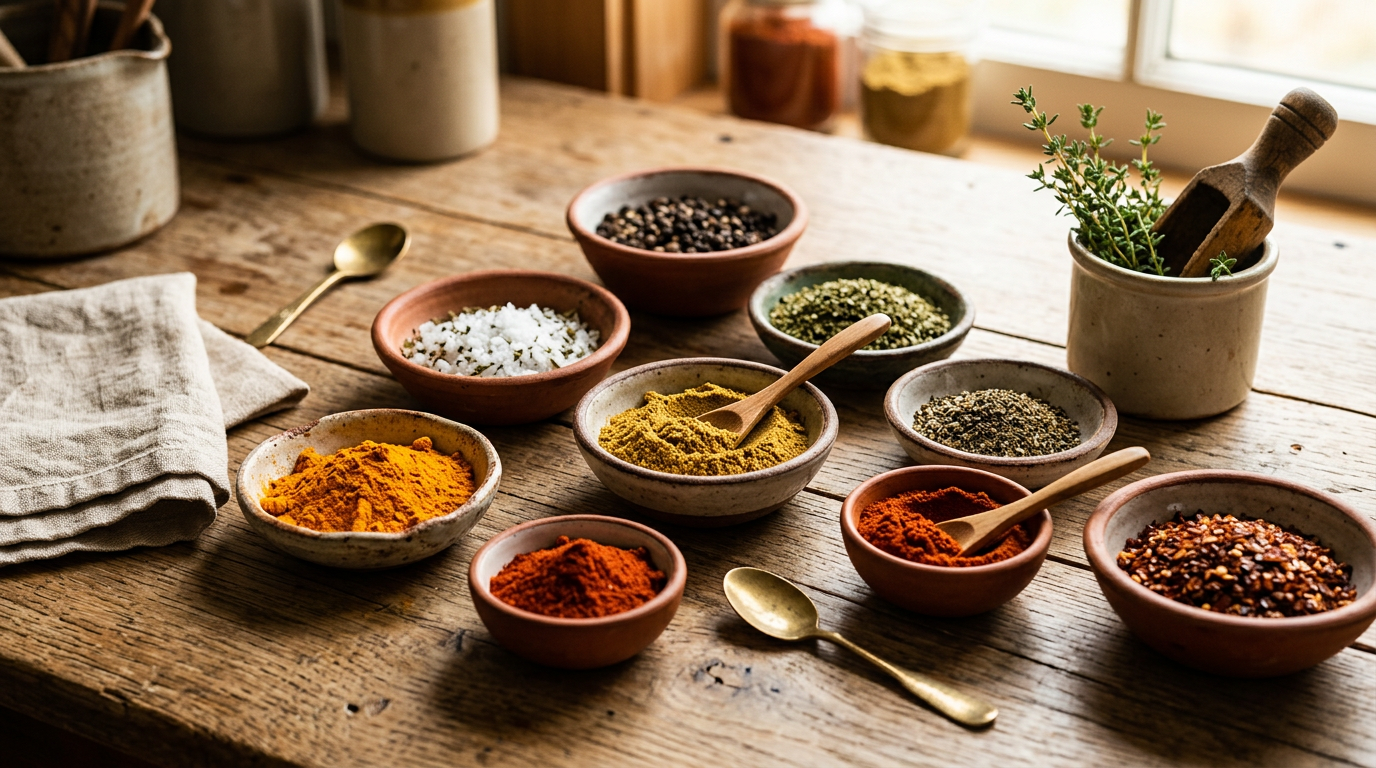
The Power of Spices
Spices are the secret weapons of great cooking. A pinch of the right spice can transform a simple dish into something extraordinary, adding depth, warmth, complexity, and aroma that elevates the entire eating experience.
Yet many home cooks rely on the same few spices or avoid them entirely, intimidated by the vast world of flavors available. This guide will help you understand spices, build your collection, and use them with confidence.
Understanding Spices vs. Herbs
Spices
Spices come from the non-leafy parts of plants:
- Seeds: Cumin, coriander, mustard, fennel
- Bark: Cinnamon, cassia
- Roots: Ginger, turmeric, galangal
- Fruits: Black pepper, chili peppers, allspice
- Flower parts: Saffron, cloves
Herbs
Herbs come from the leafy green parts of plants:
- Fresh: Basil, cilantro, parsley, dill
- Dried: Oregano, thyme, rosemary, sage
Key difference: Spices are generally more potent and longer-lasting than herbs.
Essential Spices for Every Kitchen
The Foundation Spices
These versatile spices form the base of countless dishes:
Black Pepper
- The most widely used spice in the world
- Adds heat and complexity to virtually any dish
- Buy whole peppercorns and grind fresh for best flavor
- Varieties: Tellicherry (bold), Malabar (balanced), white pepper (mild)
Salt
- Not technically a spice, but essential for flavor
- Types: Kosher (versatile), sea salt (finishing), Himalayan pink (mineral-rich)
- Salt enhances other flavors and balances sweetness
Garlic Powder
- Convenient alternative to fresh garlic
- Milder, more uniform flavor
- Essential in spice rubs and dry mixes
Onion Powder
- Sweet, savory flavor without moisture
- Great for spice blends and rubs
- Complements garlic powder perfectly
The Warm Spices
These spices add warmth and sweetness:
Cinnamon
- Two main types: Ceylon (true cinnamon, delicate) and Cassia (common, bold)
- Used in both sweet and savory dishes
- Pairs well with apples, squash, and meats
Cumin
- Earthy, warm flavor with slight bitterness
- Essential in Mexican, Indian, and Middle Eastern cuisines
- Toast whole seeds before grinding for enhanced flavor
Paprika
- Made from dried peppers
- Types: Sweet (mild), hot (spicy), smoked (wood-smoked flavor)
- Adds color and flavor to dishes
Nutmeg
- Warm, sweet, slightly nutty flavor
- Use freshly grated for best results
- Essential in béchamel sauce and baked goods
The Aromatic Spices
These spices add distinctive, complex aromas:
Cardamom
- Intensely aromatic with citrus and mint notes
- Used in Scandinavian baking and Indian curries
- Buy whole pods and extract seeds as needed
Coriander
- Citrusy, slightly sweet flavor
- Seeds used in curries and pickling
- Ground coriander is versatile in spice blends
Fennel Seeds
- Sweet, licorice-like flavor
- Essential in Italian sausage and Indian cooking
- Toast before using to enhance flavor
Mustard Seeds
- Pungent, sharp flavor when whole
- Milder when ground into powder
- Yellow (mild), brown (medium), black (strong)
Building Flavor with Spices
The Toasting Technique
Toasting whole spices before grinding or adding to dishes:
- Releases essential oils and aromas
- Deepens and complexifies flavors
- Removes raw, bitter notes
How to toast:
- Heat a dry skillet over medium heat
- Add whole spices in a single layer
- Shake pan frequently for 2-4 minutes
- Remove when fragrant and slightly darkened
- Cool before grinding or using
Blooming Spices
"Blooming" means cooking spices in fat to release their flavors:
- Heat oil, butter, or ghee in a pan
- Add spices and cook for 30-60 seconds
- Spices will sizzle and become fragrant
- Add other ingredients to stop cooking
This technique is essential in Indian, Middle Eastern, and many other cuisines.
Layering Spices
Build complex flavor by adding spices at different stages:
- Beginning: Toasted whole spices in oil (base flavor)
- Middle: Ground spices with aromatics (body)
- End: Delicate spices and fresh herbs (bright notes)
Classic Spice Blends
Garam Masala (Indian)
- Coriander, cumin, cardamom, cinnamon, cloves, black pepper
- Warm, complex blend for curries and meats
- Add at end of cooking to preserve aroma
Chinese Five Spice
- Star anise, cloves, cinnamon, Sichuan pepper, fennel seeds
- Sweet and savory with licorice notes
- Used in braises, marinades, and rubs
Ras el Hanout (North African)
- Up to 30 different spices including cardamom, cumin, cinnamon
- Complex, warm, slightly sweet
- Used in tagines, couscous, and rice dishes
Za'atar (Middle Eastern)
- Thyme, sumac, sesame seeds, salt
- Tangy, herbal, nutty flavor
- Sprinkle on flatbreads, salads, and meats
Cajun/Creole Seasoning
- Paprika, garlic powder, onion powder, cayenne, oregano, thyme
- Bold, spicy, savory blend
- Used in jambalaya, gumbo, and blackened dishes
Storing Spices Properly
Optimal Storage Conditions
- Cool: Away from heat sources
- Dark: In opaque containers or dark cabinets
- Dry: Away from moisture and steam
- Airtight: In sealed containers to prevent oxidation
Shelf Life Guidelines
- Whole spices: 3-4 years (cumin, coriander, peppercorns)
- Ground spices: 2-3 years (cinnamon, nutmeg, paprika)
- Delicate spices: 1-2 years (saffron, vanilla beans)
Testing Freshness
- Visual: Faded color indicates age
- Aroma: Crush a small amount; should be fragrant
- Taste: Should have distinct flavor, not flat or musty
Buying Tips
- Buy from stores with high turnover
- Purchase whole spices when possible
- Buy small quantities of rarely-used spices
- Check expiration dates on packages
Common Mistakes to Avoid
Using Old Spices
Spices don't spoil in a dangerous way, but they lose potency. Old spices result in bland, flat dishes.
Adding Spices Too Late
Ground spices need time to cook and develop flavor. Add them early enough to bloom in fat or simmer in liquid.
Over-Spicing
More is not always better. Start with small amounts and taste as you go. You can always add more, but you can't remove it.
Not Toasting Whole Spices
Skipping the toasting step leaves spices with raw, bitter flavors that don't integrate well into dishes.
Storing Near the Stove
Heat and steam from cooking degrade spices quickly. Store them in a cool, dark cabinet instead.
Conclusion
Spices are the foundation of flavorful cooking across all cuisines. By understanding their characteristics, learning proper techniques, and building a well-curated collection, you can transform simple ingredients into extraordinary dishes.
Start with the essential spices, practice toasting and blooming techniques, and gradually expand your collection as you explore different cuisines. With time and experience, you'll develop an intuitive sense for which spices work together and how to build complex, satisfying flavors.


